An Expert Review of the Human Brain Read Book Embroidery Design
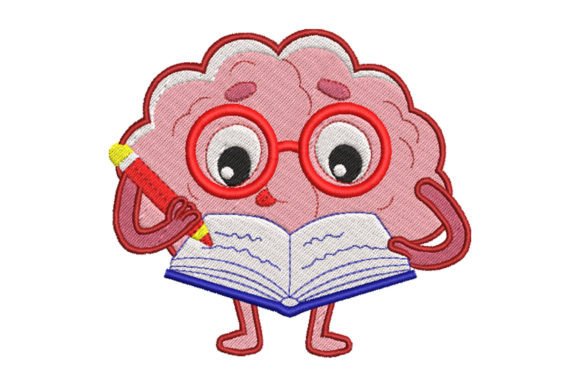
When an embroidery file lands in my inbox, my first thought isn't just about the art—it's about the craft. How will this translate into thread on fabric? What story will it tell on a finished product? The Human Brain Read Book design presents itself immediately as a clever fusion of concept and whimsy. It’s not merely a brain, and it’s not merely a book; it’s a playful, intellectual character that feels ready to be stitched into something with personality.
The First Impression: Whimsy Meets Intellect
The mood here is smart but approachable. This isn't a stern, scientific diagram; it’s a brain with a book, suggesting curiosity, learning, and a lighthearted love for knowledge. The layout, with its integrated elements, creates a cohesive silhouette that’s excellent for a clean, impactful embroidery appliqué or a detailed fill stitch design. The detail level appears balanced—enough to give the brain and book texture and definition, but not so dense that it becomes a burden on thinner fabrics. Its visual personality leans toward the giftable, the boutique-ready, the item that makes someone smile and think.
Where This Design Finds Its Perfect Home
Imagining this design stitched out, I see it belonging naturally to a few key projects. For a custom tote bag or a lightweight sweatshirt, it becomes a statement piece for a teacher, a student, or anyone in a creative field. On a baby’s romper or a nursery pillow cover, styled with soft thread colors, it transforms into a charming “little genius” theme, far more unique than generic alphabet blocks. As a standalone embroidered patch, it’s instantly recognizable and could be applied to anything from a backpack to a denim jacket.
The Back To School connection is obvious, but its appeal is broader. This isn’t confined to September. It works as a thoughtful gift for a graduation, a promotion, or a book lover’s birthday. For small shop owners and Etsy sellers, it provides a ready-made asset for a line of “smart gifts” or boutique academic apparel. In a real-life scenario, I’m picturing preparing a custom embroidered canvas apron for a librarian—a personalized, durable product that carries this design’s intellect and whimsy perfectly.
Performance in Real Stitching Situations
On stable fabrics like cotton twill for tote bags or mid-weight sweatshirt fleece, this design should perform beautifully. The defined shapes are ideal for crisp satin stitch borders or clean appliqué edges. For baby clothes or thinner tees, careful attention to stitch density and stabilizer choice will be key to prevent puckering, especially in any denser fill stitch areas representing the brain’s texture.
On curved surfaces like caps, the overall compact, integrated silhouette is a plus, but those detailed corners around the book and brain contours will need a skilled hooping and potentially a lighter stitch count to maintain clarity. For dark fabric backgrounds, the design’s success will hinge entirely on thread color contrast. A bold, bright palette will pop; a subdued one might lose its playful impact. Always test on scrap first.
This design elevates a product. On a handmade presentation, it conveys thoughtfulness, adding perceived value. For customer trust and brand consistency, a clean, well-executed stitch-out of this clever concept signals professionalism. Its giftability is high—it’s specific without being obscure, clever without being cryptic. That recognition factor is its commercial strength for craft businesses and apparel decorators.
Caution Zones and Careful Application
There are places where I’d approach the Human Brain Read Book design with deliberate planning. In very small hoop sizes, the detail might become muddled; it likely needs a certain scale to shine. On highly textured or stretchy fabrics, the intricate lines could distort. Any tiny lettering (if part of the “read book” theme) would require microscopic attention to stitch settings.
Products destined for frequent washing, like kitchen towels or everyday tees, need a robust stitch construction. A running stitch outline might not hold up as well as a satin stitch over time. For layered garments or fabrics with nap, like blankets, a sturdy stabilizer is non-negotiable to keep the design sharp. The charm is in the clarity; losing that hurts the final product.
Practical Notes from the Hoop
Before committing this to a client project or your shop merchandise, here’s my practical checklist. Test the embroidery file on the actual scrap of your target fabric. Check thread color contrast for both light and dark backgrounds—run it through black and white mockups to see how the shapes hold without color. Review the stitch density in your software; if it feels heavy for lightweight apparel, consider simplifying fill areas.
Confirm the physical hoop size needed for the detail to be clear. Inspect the small details: are the brain’s folds and the book’s pages distinct? Use the proper stabilizer; don’t guess. Crucially, check the licensing terms of the digital embroidery file before selling finished items or digital products derived from it. Can it be used for commercial embroidery, or is it for personal projects only? This is the bedrock of a professional craft business.
The Final Stitch: A Design That Engages
The Human Brain Read Book embroidery design, in my judgment, is a strong, engaging asset. It combines theme and artistry in a way that translates well to thread. It fits a niche but appealing market, from custom apparel to personalized gifts. It has the visual personality to attract buyer engagement in an Etsy listing or at a craft fair booth. Its value isn’t just in the digital file; it’s in the finished product it enables—a smart, charming, handmade item that tells a story. For designers, makers, and entrepreneurs looking for a design that works as hard as it plays, this one deserves a spot in your project queue. Just remember the fundamentals: test, stabilize, and stitch with intention.